August 12th, 2009 by alexi
 Becky, a university graduate with a Bachelor’s of Science Degree in Nursing, took time out of her busy week going through hospital orientation as a recently certified Registered Nurse, to answer some questions about the world of nursing.
When did you become interested in nursing?
I became interested in nursing after my freshman year of college. I was Pre-Med and the fit just didn’t seem right for my long term goals. I knew I wanted to be a mom, but at the same time, I wanted to have a career. I love that nursing will afford me the opportunity to identify with something outside of mothering. Also, after a few years of work experience, I plan to go back to school and get my master’s degree and become a nurse practitioner, or possibly even get my Doctorate in Nursing Practice. I love that I have these choices!
What is your favorite part of being an RN?
I love that I am always learning! It can be frustrating at times to not know everything, but the learning and growth can be so rewarding because you really see the impact in people’s lives! As a nurse you get to be with your patients during some of their most vulnerable times-being a part of that and helping them through the process of healing, loss, whatever their situation may be is really fulfilling.
What has been particularly memorable about your job now or nursing school?
I can’t pinpoint one single patient. You see everything in nursing! Really, everything.
“You see everything in nursing! Really, everything.”
I love the growth that I have seen in myself throughout nursing school, and even now as a RN- I learn something new each day, and have so much left to learn. I also love knowing that I really helped someone in my day.
Read the rest of this entry »
Tags: health, health care, health care degree, interview, medical careers, nursing, spotlight
Posted in Career, Education, Healthcare, Uncategorized | 4 Comments »
July 31st, 2009 by alexi
Are you caring, sympathetic and love working with people? Are you emotionally stable, able to withstand human trauma, suffering and other medical-related stresses?
NATURE OF THE WORK
From Ambulatory care to Urology, there is something under the umbrella of nursing that could be right for you. Registered nurses (RNs) tasks include everything from recording patients’ medical histories and symptoms, educating patients on various medical conditions, providing support to patients’ family member, operating medical machinery, or administering medications.

RNs can specialize in various areas of patient care, like operating room nurses who assist surgeons, or according to specific health conditions, like diabetes management nurses. Other RNs specialize working with one or more organs or body systems (like dermatology nurses), or with a specific population demographic (like pediatric nurses who work with children).
Some RNs combine specialties. For example, a ‘pediatric oncology‘ nurse deals with children who have cancer.
Read the rest of this entry »
Tags: health, health care, health career, nursing
Posted in Career, Healthcare | 2 Comments »
July 27th, 2009 by alexi
THE CHIROPRACTIC APPROACH TO HEALTHCARE
Chiropractors treat problems related to the musculoskeletal system and believe this improves the nervous system and general health, all without drugs or surgery.
Like other health practitioners, chiropractors follow a standard routine to get information needed to diagnose and treat patients. They take the patient’s medical history; conduct physical, neurological, and orthopedic examinations; and may order laboratory tests like X rays.
In addition to general chiropractic practice, some chiropractors specialize in sports injuries, neurology, orthopedics, pediatrics, and/or nutrition.
Read the rest of this entry »
Tags: Chiropractors, health care
Posted in Healthcare | 1 Comment »
June 16th, 2009 by Kate Lehnhof
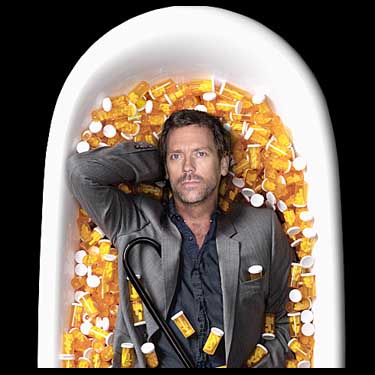
No matter what job or career field is chosen, there is some degree of customer service that has to be achieved. Phone companies have to listen to screaming customers and calmly talk to them about switching plans. Teachers have to deal with irate parents. Businessmen have to deal with angry stockholders when the cash flow isn’t great. All of these things require some the conscious decision to act positively and sometimes to conceal your personal feelings about the person or situation.
In the health care industry this responsibility is heightened to the most extreme degree because human life is at stake and people who emotional and vulnerable are involved.
But where does this elusive “bedside manner” originate from? Is it intuitive? Is it learned?
Dr. Pauline Chen believes bedside manner is part of the “hidden curriculum” in any medical career training. She also believes that it is something than can be learned. She cites a recent study where physician-teachers were assigned time to discuss communication techniques and the adoption of a caring attitude to students and the results were favorable.
Many believe that people learn their style of caring for patients from those who train them and coworkers. Classes such as “Intro to Patient Care” are often offered in medical training programs.
A doctor, like anyone else who has to deal with human beings, each of them unique, cannot be a scientist; he is either, like the surgeon, a craftsman, or, like the physician and the psychologist, an artist. This means that in order to be a good doctor a man must also have a good character, that is to say, whatever weaknesses and foibles he may have, he must love his fellow human beings in the concrete and desire their good before his own
W.H. Auden
Tips for providing excellent patient care
Actively listen to patient. Show them with your eyes and body language that you care.
Respond sympathetically to complaints.
If you only have a short time to talk to a patient, sit down. The patient won’t feel as rushed.
Reassure and comfort patients when necessary. This doesn’t mean you need to give them false hope about their prognosis but you can deliver bad news gently.
Tags: health care, patient care
Posted in Healthcare | 3 Comments »