Guest Post: Look Fear in the Face

I graduated from college twenty years ago. I turn 42 next week. The twenty years between now and then feel like a flick of a magic wand, a wink of my daughter’s eyes, a breath between youth and middle age. Of late I think a lot about what I would tell my twenty-one year old self to do differently. I know exactly. “Play it less safe. A lot less safe. Believe in yourself. Don’t listen to that voice inside your own head that whispers cruelly in the night, “‘you aren’t good enough, you don’t deserve it, things like that don’t happen for people like me.’”

And I would have listened to that quiet voice inside me that told me what I was, way down deep in the essence of my soul. I would have charged ahead in that direction without reserve.
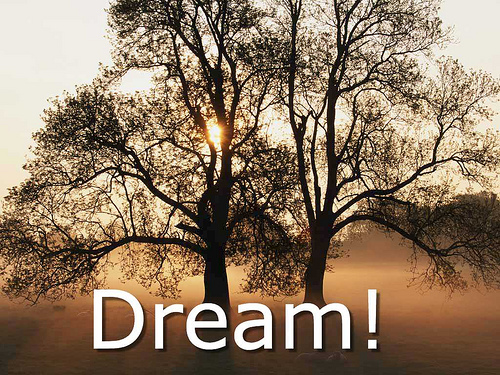
Photo courtesy of Melody Campbell on Flickr.

You and my 21-year-old self might say to me, “Yeah, but I need to pay the bills.” I agree. You have to pay the bills. And there are student loans and rent and everything else that drags us into the practical instead of the sublime. But let me tell you something. All that will still be there in twenty years. The question will be, are you doing something that you love, that matters to you, or will you be trudging to work everyday thinking, “I hate my life.”

Listen, I get it. I know it’s a frightening world out there. Everything on the news is bad; the economy, the environment, unspeakable violence, natural disasters. But there is no reason that any of it needs to discourage you from pursuing your dreams. When I look at the people in the world who are successful, who say they live their dream or work in a job that doesn’t feel like work, they share the same two qualities. They are fearless and they never give up. They had a vision for their life. Then they chipped away at it bit by bit until they got to their destination.

“Have you ever looked fear in the face and said, I just don’t care?” - Pink “Glitter in the Air”

My first dream was to be an actress. I studied theatre at USC. After graduation I gave up too quickly and found a practical job in business that led to another and another until ten years were gone. Poof. Vanished. And I was 30.

Something someone said to me during an acting class in college haunted me during those 10 years. During feedback about an exercise I’d done, a classmate said, “The way she puts words together makes me know she’s a writer.” Like a lightening bolt from the heavens I knew his words were true. I am, at my very core, a writer.

But I pushed it down, way down inside, so that I could bear the work I had to do in the business world. Until one day the need to be who I am overcame my fear. I began to seriously write in 2000. I started with a play that won first prize in a local contest in 2001. It’s not a Pulitzer winner. It didn’t make it to Broadway. But it was my first serious attempt and it won a prize. That told me enough. I was onto something.

My first novel is being published in the spring. It hasn’t been easy, don’t get me wrong. I’ve had a lot of rejection and feedback along the way that’s caused me to cry into my hands sitting on the bathroom floor so my daughters couldn’t see. However, I have never given up. And I won’t. I will continue stringing words together to make sentences that tell a story until the day I die. Because it is who I am.

Who are you? I know you have a calling. Each of you know what it is, if you’re honest with yourself. Now is the time to recognize and seize that part of yourself that you know is there, that hidden gift that will get squelched with the realities of life if you are not careful. It requires courage. But I know you have what it takes.

What do you really want? Write it down. Map out the plan. Put the pictures of your perfect life into your head. Then go for it.

It is never too late. I tell everyone that. But most of those people are old like me, instead of at the beginning of adulthood like you. Plan now to follow your calling. There’s no need to waste 10 years or 20.

Do it. Start now. There is nothing holding you back except your own fears. Take it from me.

Author Bio

Tess Hardwick is a writer, mother and dreamer. Her first novel, “Riversong” will be available in the spring of 2011. You can reach her at tesshardwick.com. Follow her at twitter - @tesshardwick.
Interview With The Image Professor, LisaMarie Luccioni

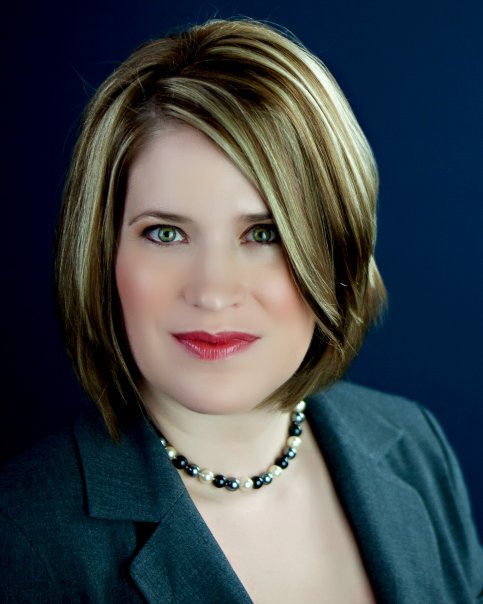
Teachers have the power to impact the world by imparting knowledge and wisdom with their students. This week we had the pleasure of connecting with one such influential educator, LisaMarie Luccioni, a communications and etiquette professor with the University of Cincinnati. An image and etiquette expert, LisaMarie is often referred to as The Image Professor and is a certified image consultant with AICI, the Association of Image Consultants International. LisaMarie has been featured on NPR, CNN’s Anderson Cooper 360 Show, and blogs regularly for Psychology Today. An educator at heart, she blogs about important image and etiquette issues from a social, political, and cultural framework, empowering her readers to project their visual and verbal best.

MC&C: What is your job title / description?
LML: I’m a twenty-year adjunct professor of Communication at the University of Cincinnati. I have two teaching appointments: (1) teaching communication in the College of Arts & Sciences and (2) business etiquette/professional image in the College of Business.

MC&C: Describe a typical day on the job.
LML:

  • Drive to campus and hope to find a free parking space.
  • 12:00-12:30 Greet colleagues, check faculty mailbox, try (!!) to check email inbox
  • 12:30-1:45 Teach a Day Class Session
  • 2:00-3:15 Teach a Day Class Session
  • 3:30-4:45 Office Hours (advising, meet with Students)
  • 5:00-6:30 Continue advising students as needed, grade papers/speeches, prepare for my evening class/future class sessions, try to read emails, walk to our university center for dinner
  • 6:30-9:10 Teach a Night Class Session
  • 9:30 Leave campus! Parking lots can be far from one’s building, so I’ll usually switch into my comfortable walking shoes.

During this whole day, I’m in high-energy mode. Classroom is interactive lecture. When class has formally ended, students pose various individual questions. Future teachers? Prepare yourself for questions galore. Your job is to answer them.

I try to get most of my grading done on campus, but when necessary, will bring home with me. I pride myself on returning work quickly. You get it to me on Tuesday, it’s returned on Thursday.

MC&C: What is the most rewarding part of being a professor?
LML: My students are my loves. They keep me young, teach me new words, and make working a pleasure. Fall quarter on a college campus is a cool occupational gig.

Students learn. Students improve. Students remember. They take what you share as they move into their futures. In that way, you’re always with them. Many will write years later emphasizing what they learned in your class and thanking you for it.


I become attached to my students. In fact, when they take their final exam, it’s sad for me because I know that’s the last time I might see many of them again. God love Facebook. I receive updates there.

Moreover, your students leave school to make their own contribution to our world and man, my students are doing some really cool things. They’re now dispersed across the globe doing what God planned for them to do. For a brief period of time, I had the pleasure of being a part of their lives. What value and honor in that.

MC&C: What advice would you give a student considering education?
LML:

  • Know your subject. Students rightly expect teachers to be well versed in their subject matter. Begin with your foundation and build from there. I’m a better teacher now than I was twenty years ago and such is to be expected. Trial and error can be your best friend. In life, school is never out.
  • Students learn in different ways. Acquire an understanding of learning theory; research the different teaching methods and experiment with them all.
  • Learn student names. Learn them and use them in class, in the hallway, and in unexpected encounters in the community. Indeed, discover what’s important to individual students (ALL of them) and make reference to those interests/those plans/those dreams as you lecture. Students will love you for it.
  • **Have a CLEAR electronic policy in place. My policy is written on my course syllabus. During class, I don’t allow cell phones or computers. If I see someone check their text message, I mark them absent for the day. Obviously, if someone is expecting an important phone call/text, I’m fine with that as long as they relay this to me before class begins. If you determine your policy, have it in writing, and enforce it, you won’t have to compete against gadgetry.

MC&C: What is most challenging about your profession?
LML:

  1. Maintaining stamina. Capturing and maintaining your students’ attention demands energy, passion, and enthusiasm. The demonstration of all over a period of ten hours can leave you (at times) mentally and physically depleted.
  2. Grading can be surprisingly hard work, especially critical essays. Subjective grades (speeches and papers) must be defended. If a student receives a low grade on a speech, you need to give him/her an explanation for why this is.
  3. Maintaining cultural relevance. Some of my best course concept examples are no longer understood by the current generation (although my middle-aged students immediately get them).

MC&C: In what way did your education prepare you for your career?
LML: I’ve always loved school and never feared working hard. Graduate school was a demanding time, one of the roughest and most humbling of my life. I learned that no matter how “good” you are in high school and indeed, even in college, when you’re at the graduate level, you can struggle to even be the mid-level grade.

But.

The silver lining is that their excellence raised the level of my own game. I’m a better speaker, writer, and teacher because of the quality of students in that academic population group.

I’d also add that good teachers combined with my work ethic better prepared me. A teacher who can simultaneously clarify and motivate is a treasure. Become that type of teacher.

MC&C: If you could do it all over again, would you still become an educator?
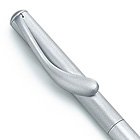
LML: This quarter alone, my students complimented my classes, wrote me thank you notes, triggered some speaking engagements, bought me my dream-list sterling silver pen from Tiffany’s (pictured at right), and allowed me into their lives for a period of ten weeks. Place students in a classroom and add a teacher. Magic can happen. I want to be there when it does.

MC&C: Thank you, LisaMarie, for sharing your thought-provoking experiences with us!

If you’re considering a rewarding career in education, depending on the grades you teach will determine what type of education is required. For example, to teach elementary school requires a bachelor’s degree in elementary education, while teaching high school will require a bachelor’s degree in secondary education. Finally, teaching at a college or university will typically require you to earn a master’s degree in the subject you will teach.

Keep up with LisaMarie Luccioni on her blog, The Image Professor, follow her on Twitter @imageprofessor or visit her online at The Image Establishment.

Copyright © 2011 . MyCollegesandCareers.com . All Rights Reserved